Dear Nonprofit Sector,
The Danger of the Closed Loop
One of the most striking things about working across sectors is realizing how often industries trap themselves in the same conversations.
Sara Elghobashy
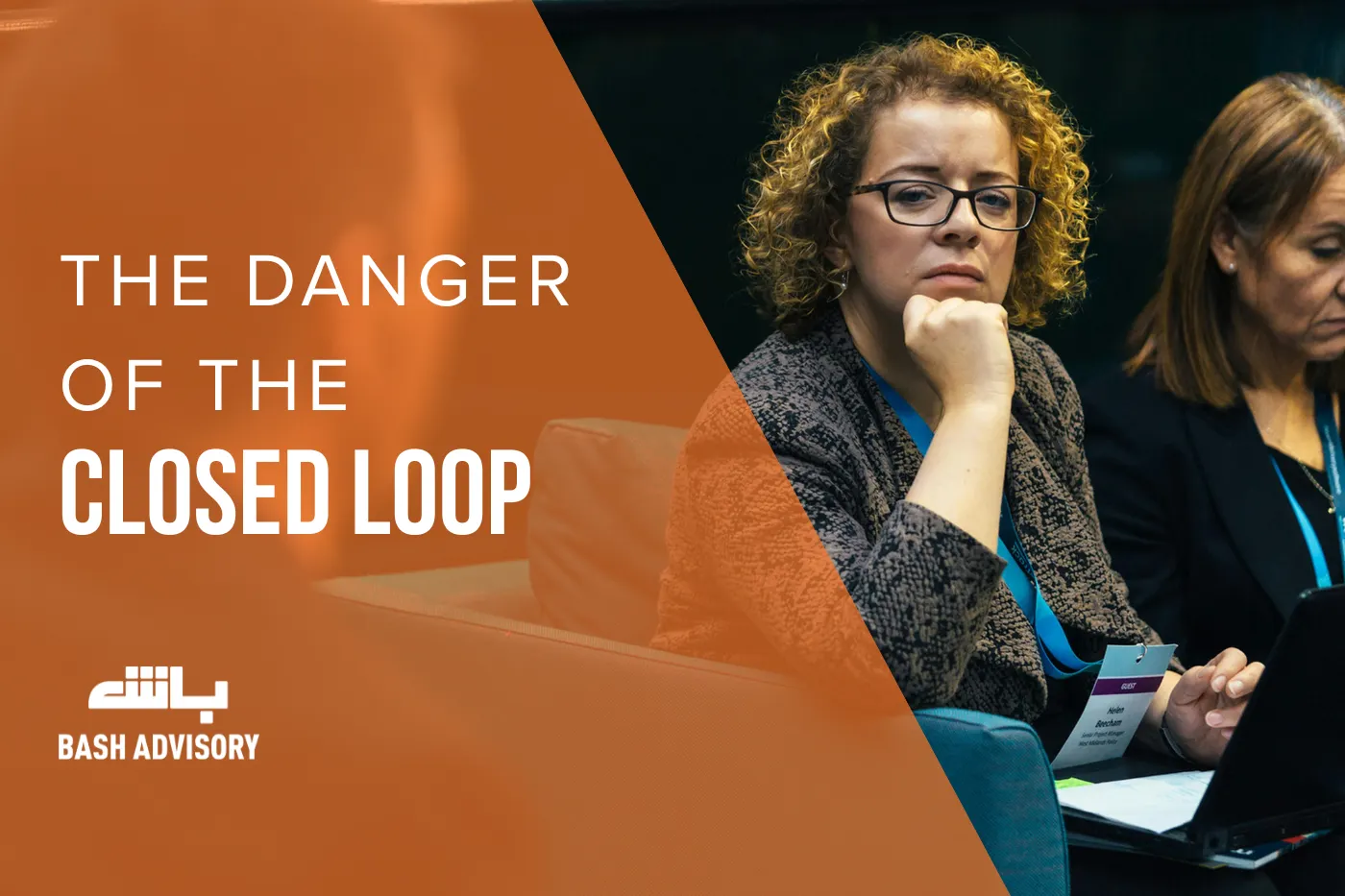
It’s a pattern I’ve watched repeat itself at journalism conferences for the past five years. The agenda changes, the panelists rotate, the host city shifts. But the conversation is the same — sustainability, audience engagement, AI disruption, creators, revenue diversification.
Important conversations, absolutely. But increasingly, I’ve left these gatherings with the same thought — the outside forces shaping the field are moving faster than anything happening inside it.
Maybe part of the challenge is not just that journalism is under pressure. Maybe it’s that journalism has become too insular in how it seeks solutions.
The cost of a closed loop
Every sector has its own conferences, its own listservs, its own conventional wisdom about what’s possible and what isn’t. That’s natural — practitioners need shared problems and shared language to make progress. But shared language can curdle into a closed loop, where the same people refine the same frameworks year after year while the ground shifts underneath all of them.
Nonprofit journalism is a useful case because it is relatively new. Most newsrooms operating under a nonprofit model are less than twenty years old. Some are less than five. The field is still figuring out how to fundraise, how to build a board, how to talk to major donors, how to think about endowments, how to engage members as something other than transactional subscribers.
Meanwhile, hospitals have been doing this for over a century. Universities, longer. Theaters, dance companies, food banks, environmental groups, civil rights organizations — they have all spent decades or generations refining fundraising infrastructure, board engagement, donor stewardship, and community-centered growth models. Many of those organizations have survived economic downturns, political shifts, technological disruption, and changing audience behaviors before.
Their answers may not be identical, because the missions aren’t identical. But the thinking has been done, the mistakes have been made, and the playbooks have been written. There is wisdom there worth studying.
The cross-sector advantage
In philanthropy and nonprofit work, there can sometimes be pressure to become hyper-specialized — to stay in one lane, speak one language, and build expertise within a narrow ecosystem. Deep expertise absolutely matters. But so does intellectual cross-pollination.
The most generative conversations I have had in my career have not been with peers in my own corner of it. They have been with the artistic director of a regional theater talking about how she stewards subscribers into donors. With a hospital foundation executive explaining how they think about planned giving. With a foundation program officer describing how he structures a feedback loop with grantees.
Almost none of what they told me was directly applicable to the organization I was working with at the time. All of it changed how I thought, and this practice became the blueprint for how we work at Bash. The reason our fundraising lands the way it does is not because we have a secret donor list. It is because we move between sectors — global development, journalism, public health, education, the arts — and we have made it our job to notice what travels. Our work gets stronger every time we carry an idea across a border.
This is why I am increasingly convinced that one of the most underrated investments a nonprofit leader can make is time spent in rooms that aren’t yours. To listen to how a totally different kind of mission-driven leader frames a problem you have, and to notice which of their instincts you don’t share and why.
Nearly every sector is navigating instability simultaneously. Artificial intelligence is reshaping labor and communication. Public trust is eroding across institutions. Audiences are fragmented. Younger generations engage differently than previous ones. Organizations are being asked to move faster while operating with fewer resources.
It’s time to think about what we can learn from each other to get us over these hurdles — no single field is going to solve these challenges alone. So schedule a standing coffee with a peer in a completely different sector. Attend one conference a year that is not for your field. Read one trade publication that isn’t yours. You can find solutions across boundaries, learn to adapt ideas to your realities, and hopefully build institutions that are more resilient because they were shaped by more than one way of thinking.
Share Insight
Other INSIGHTS

THE CALM YOU WANT IN DECEMBER IS CREATED IN SEPTEMBER
As September approaches, development professionals begin to brace themselves for the year-end rush — fall reporting deadlines, year-end campaigns, outstanding pledges to close, new fiscal year budgets to build. And somewhere in the middle of all of it, you look up and realize that December 31 is much closer than it seemed a few weeks ago.
(
Read More
)
Fundraising Doesn’t Need a Rebrand. It Needs a Better Story.
A few years ago, I was attending a conference and found myself chatting with a program officer between sessions. As we were catching up, one of their peers from another foundation walked over to join the conversation. We exchanged introductions, and when I mentioned that I work in fundraising, I watched something unexpected happen.
(
Read More
)
The Gala Reckoning: What Do You Want Your Event to Achieve?
Anyone who has worked with me has heard me get on my soapbox about galas. Not because they aren’t energizing, and not because they don’t serve a purpose, but because we’ve allowed them to become something they were never designed to be — the centerpiece of a fundraising strategy.
(
Read More
)