Dear Nonprofit Sector,
Why the Most Effective Year-End Gifts Go Further with Advocacy
This year has left many communities staring down a stark reality: critical services that families rely on — housing assistance, health care, education, food, access to information — are under threat.
Sara Elghobashy
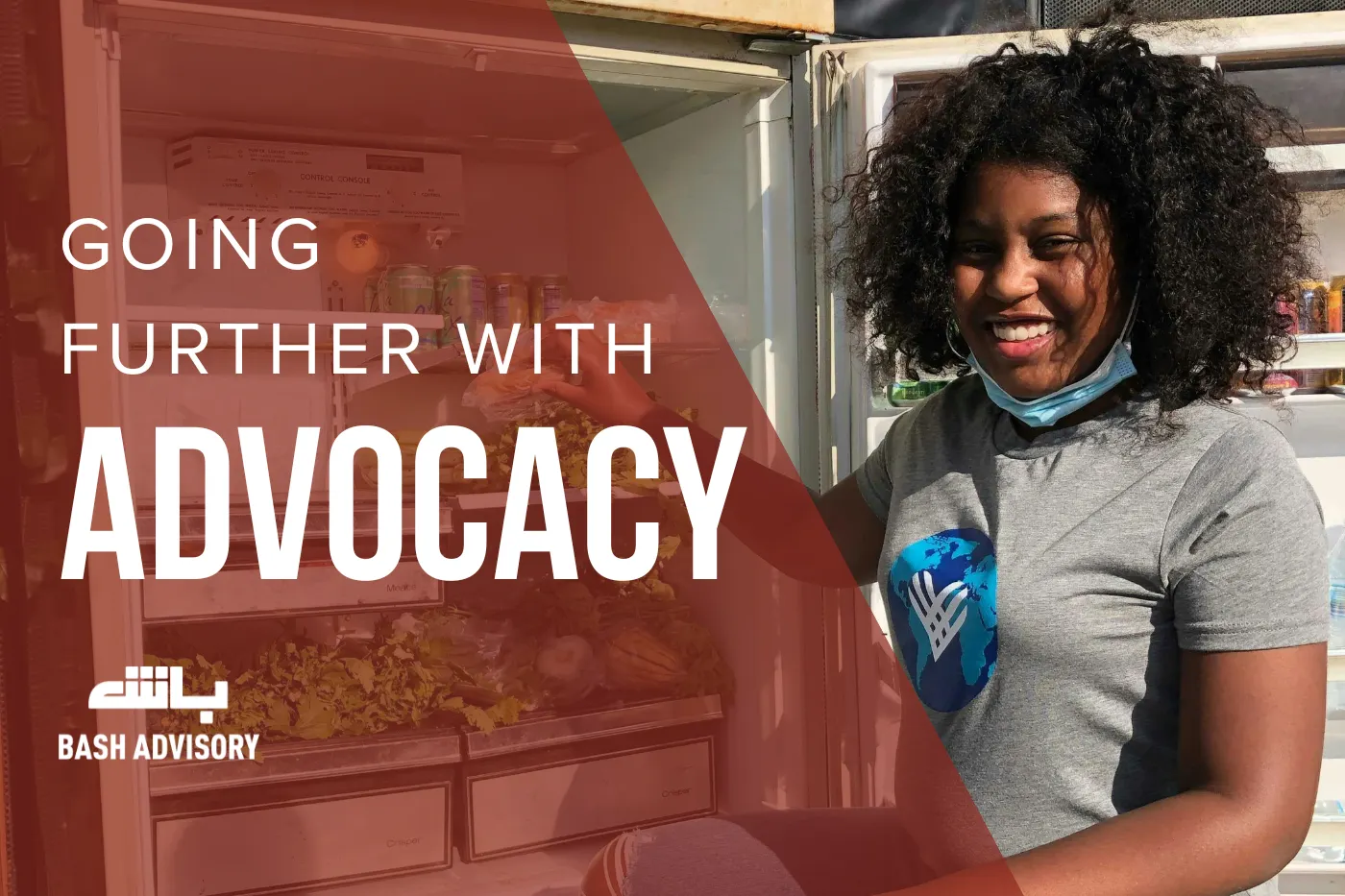
This giving season, it’s tempting to think the solution is simply to give more to direct service organizations to fill the gaps. But the truth is, without strong, well-funded advocacy, the pipeline of public resources that sustains these services will always be in danger of catastrophic cuts.
Advocacy is Democracy in Action
Advocacy organizations are the connective tissue between communities and lawmakers. They take the lived experiences of those most affected and put them squarely in front of decision makers who otherwise may never hear their voices. They translate stories into policy language. They expose the real costs of political choices. And they ensure that government actually works for the people it is supposed to serve.
Despite this critical role, many advocacy nonprofits struggle to engage donors. That means the very groups working to protect community services are operating on lean budgets and short-term grants. This imbalance leaves policy organizations battling issues of enormous consequence with infrastructure that rarely matches the scale of their mandate.
One reason this gap persists is that advocacy doesn’t always look or feel as tangible as direct services. Meals can be counted, after-school participants tallied, patients treated. Advocacy’s impact, in contrast, is harder to measure and can take longer to see. But when it lands, it delivers exponential returns that can safeguard entire systems. One campaign to protect city housing dollars can secure shelter for thousands. One policy win to raise the minimum wage can put more money in the pockets of millions of workers, boosting entire local economies in the process.
Another reason donors shy away from advocacy is that it feels “too political.” But advocacy, at its core, is not about parties or campaigns; it’s about ensuring that lawmakers understand the realities facing the people they serve. When a clinic testifies about the impact of Medicaid cuts, when parents push for stronger school funding, when tenants organize to preserve affordable housing — those are acts of advocacy. They are fundamentally about democracy, not politics. To treat advocacy as off-limits is to confuse partisan maneuvering with civic participation, and that mistake leaves the most vulnerable without a voice where it matters most. Not to mention, being apolitical is a luxury none of us can afford.
A Call to Donors This Season of Giving
Donors who want their dollars to go further should see advocacy as a core strategy of their end-of-year (and year-round!) giving. It is the difference between patching holes and repairing the foundation. The most effective philanthropy does both — meeting urgent needs in the moment and investing in the policy work that makes those solutions sustainable.
At a time when federal cuts are dismantling the basic building blocks of community well-being, we all have a choice to make this giving season. We can continue to pave over the cracks with short-term program donations, or we can also invest in the organizations that have the power to prevent those cracks from widening.
The stakes could not be higher.
Share Insight
Other INSIGHTS

THE CALM YOU WANT IN DECEMBER IS CREATED IN SEPTEMBER
As September approaches, development professionals begin to brace themselves for the year-end rush — fall reporting deadlines, year-end campaigns, outstanding pledges to close, new fiscal year budgets to build. And somewhere in the middle of all of it, you look up and realize that December 31 is much closer than it seemed a few weeks ago.
(
Read More
)
Fundraising Doesn’t Need a Rebrand. It Needs a Better Story.
A few years ago, I was attending a conference and found myself chatting with a program officer between sessions. As we were catching up, one of their peers from another foundation walked over to join the conversation. We exchanged introductions, and when I mentioned that I work in fundraising, I watched something unexpected happen.
(
Read More
)
The Danger of the Closed Loop
One of the most striking things about working across sectors is realizing how often industries trap themselves in the same conversations.
(
Read More
)